
SEO in 2026 is no longer only about ranking a blue link in Google. A serious content team now has to win three surfaces at the same time: traditional Google results, Google AI Overviews, and answer engines such as ChatGPT, Perplexity, Gemini, and Claude.
That is why the best AI tools for SEO and AEO need to do more than write paragraphs. The useful ones help you find demand, build topic authority, optimize pages for search intent, answer real questions clearly, track AI visibility, understand citation gaps, and keep your website technically clean enough for both search crawlers and AI systems.
This guide is for SaaS founders, SEO managers, content leads, agencies, creators, and small business owners who want one practical answer: which AI SEO and AEO tools are actually worth testing if the goal is more organic traffic, more AI mentions, and better visibility in buying journeys?
Pricing and product details were checked against official vendor pages on July 26, 2026. AI search products change quickly, so always confirm final pricing, limits, and supported AI engines before buying.
Our verdict: Start with Semrush SEO + AI Search if you want the broadest all-in-one SEO and AI visibility platform. Choose SE Ranking if you need a strong value-to-price option for agencies and small teams. Use Surfer, Frase, or Clearscope when your main problem is content optimization. Pick Rank Math Content AI if your site runs on WordPress. Add Profound, Peec AI, Otterly.AI, or LLMrefs when your main question is, “Are AI answer engines mentioning and citing us?”
Editorial note: This guide follows the ReviewAIToolz review methodology and editorial policy. Tool facts are checked against public or official sources where possible, and hands-on testing is labelled only when it actually happened.
Who This Guide Is For
This comparison matches a mixed search intent: informational, commercial, and early transactional. You may be researching AEO for the first time, comparing SEO software budgets, or trying to decide which AI visibility tracker belongs in your stack.
- You want more traffic from Google without publishing low-quality AI content.
- You want your brand, product, or content to appear in AI Overviews and AI answer engines.
- You need a tool that can support content briefs, optimization, internal linking, technical fixes, or AI visibility reporting.
- You are comparing SEO platforms, AEO tools, GEO tools, LLM SEO trackers, and content optimization platforms.
- You want realistic pricing notes, use cases, pros, cons, and a simple decision framework.
If you are still building your AI software stack, you can also browse the ReviewAIToolz AI tools directory or check our AI SEO tools comparison and decision matrix.
What SEO, AEO, GEO, And LLM SEO Mean
SEO is the work of making your website discoverable, useful, crawlable, and competitive in search engines. AEO, or answer engine optimization, focuses on getting your content selected, summarized, cited, or used by answer engines. GEO, or generative engine optimization, is the broader practice of improving visibility inside generative search experiences. LLM SEO is often used for tracking and improving how large language models mention brands, products, entities, and sources.
The important point: AEO does not replace SEO. Google’s own guidance says the fundamentals still matter for AI search experiences: helpful content, accessible pages, clear structure, quality media, crawlability, and satisfying the visitor. That means a strong 2026 stack should support both classic SEO and answer engine visibility.
For reference, read Google’s guidance on creating helpful, reliable, people-first content and its AI optimization guidance for Search.
How We Evaluated These Tools
ReviewAIToolz evaluated these tools around practical workflows, not vanity feature lists. We checked current public pricing pages, product pages, official documentation, live screenshots, and the real jobs a buyer needs done.
| Evaluation area | What we looked for | Why it matters |
|---|---|---|
| SEO workflow | Keyword research, content planning, audits, rank tracking, optimization, internal linking | You still need pages that deserve to rank in Google. |
| AEO and GEO workflow | AI Overview tracking, ChatGPT visibility, citations, prompt tracking, AI share of voice, sentiment | AI answer engines can influence discovery before a user clicks. |
| Content quality | Search intent, topical depth, question coverage, entity coverage, readability, originality | Google and users reward genuinely helpful content. |
| Technical fit | Crawlability, schema support, page optimization, AI crawler visibility, WordPress support | Weak technical SEO limits both search and AI visibility. |
| Buyer fit | Small business, SaaS, agency, ecommerce, enterprise, WordPress, budget, reporting needs | The best tool depends on the job, not only the brand name. |
| Pricing clarity | Public pricing, add-ons, prompt limits, tracked brands, tracked domains, usage limits | AEO tools can look cheap until prompt volume and projects scale. |
Editorial note: We do not claim private ranking benchmarks or hidden vendor access unless stated. This article is built from direct page checks, public vendor information, product workflow analysis, and buyer-focused scoring.
Best AI Tools For SEO And AEO By Situation
| Situation | Best tool to check first | Why |
|---|---|---|
| All-in-one SEO plus AI visibility | Semrush SEO + AI Search | Broad SEO data, audits, keyword tracking, AI visibility, and brand performance in one ecosystem. |
| Best value for agencies and SMBs | SE Ranking AI Search Toolkit | Strong rank tracking, audits, client reporting, and AI results tracking at a more approachable price. |
| Optimizing articles before publishing | Surfer | Content scoring, SERP analysis, and AI visibility features for teams focused on page-level optimization. |
| Question-led SEO and GEO briefs | Frase | Useful for research, briefs, outlines, content scoring, and monitoring Google and AI visibility. |
| Editorial teams that want clean briefs | Clearscope | Excellent content optimization workflow with straightforward reports and AI search visibility features. |
| WordPress websites | Rank Math Content AI | Works inside WordPress for content suggestions, AI tools, alt text, internal links, and AI visibility. |
| Enterprise content strategy | MarketMuse | Topic modeling, content inventory, planning, optimization, and authority-building workflows. |
| Technical SEO and AEO deployment | Alli AI | Good fit when you want automation, technical SEO updates, AI crawler support, and page-level deployment. |
| AI answer engine visibility tracking | Profound | Strong for tracking brand presence, prompts, citations, competitors, and AI answer performance. |
| Brand visibility in AI search | Peec AI | Tracks visibility, position, sentiment, prompts, models, sources, and recommendations. |
| Affordable AI search monitoring | Otterly.AI | Accessible entry point for monitoring ChatGPT, Google AI Overviews, Perplexity, Copilot, and more. |
| Fast LLM SEO tracking starter | LLMrefs | Useful for tracking AI search rankings, citations, competitors, and generative search visibility. |
Full Comparison Table
| Tool | Best for | SEO job | AEO or AI search job | Starting price note | Watch out for |
|---|---|---|---|---|---|
| Semrush SEO + AI Search | All-in-one growth teams | Keyword research, audits, rank tracking, competitor research | AI visibility, brand mentions, AI search reporting | SEO plan from $117.33/month annually; SEO + AI Search Starter from $165.17/month annually | Can be overkill for very small sites. |
| SE Ranking AI Search Toolkit | Agencies and SMBs | Rank tracking, audits, keyword research, reporting | AI Overviews, AI Mode, ChatGPT, Gemini, Perplexity tracking | AI Search add-on listed from $71.20/month annually, plus SEO plan | AI tracking adds cost on top of core plans. |
| Surfer | Content optimization | Content editor, SERP analysis, content scoring | AI visibility scoring and AI Tracker options | Discovery from $49/month annually; AI Tracker standalone listed from $158/month annually | Best with a clear content production process. |
| Frase | Briefs, questions, GEO content | Research, outlines, article writing, SEO score | GEO score and AI visibility on ChatGPT and Google AI | Starter from $39/month annually or $49 month-to-month | Not a full technical SEO platform. |
| Clearscope | Editorial SEO teams | Content optimization, briefs, topic coverage | AI search visibility and prompt tracking on supported plans | Essentials listed at $129/month | Costs more than many small-site tools. |
| Rank Math Content AI | WordPress sites | On-page SEO, content suggestions, AI alt text, internal links | AI visibility dashboard and brand tracking | Starter listed at EUR5.99/month annually | AI visibility support launched with ChatGPT first, with more platforms planned. |
| MarketMuse | Topic authority and planning | Content inventory, topic modeling, optimization, briefs | Useful for answer-ready topical depth and content gaps | Free plan available; paid plan pricing varies by package | Less focused on AI engine tracking than dedicated AEO trackers. |
| Alli AI | Technical SEO automation | Site-wide fixes, optimization, deployment, rank tracking | AI Search Visibility Engine and AI crawler support | Business listed at $249/month annually or $299 month-to-month | Best when you want automation across many pages. |
| Profound | AI answer analytics | Content opportunities from AI citations and prompts | ChatGPT, Perplexity, Google AI Overviews tracking and answer engine insights | Starter listed at $99/month; Growth at $399/month | Not a replacement for full SEO research tools. |
| Peec AI | AI search visibility teams | Source and recommendation analysis for AI search | Visibility, position, sentiment, sources, prompts, models | Pricing page varies by plan; Starter showed 50 prompts in our check | Confirm current pricing before budgeting. |
| Otterly.AI | Affordable AI monitoring | GEO URL audits and AI search recommendations | ChatGPT, Google AI Overviews, Perplexity, Copilot, AI Mode, Gemini support by plan or add-on | Lite listed at $29/month monthly or $25/month annually | Prompt limits are lower on entry plans. |
| LLMrefs | LLM SEO tracking starter | Keyword and competitor insights for AI search | AI rankings, citations, geo-targeting, prompt visibility | Free account available; no credit card stated | Validate paid limits and export needs before scaling. |
1. Semrush SEO + AI Search
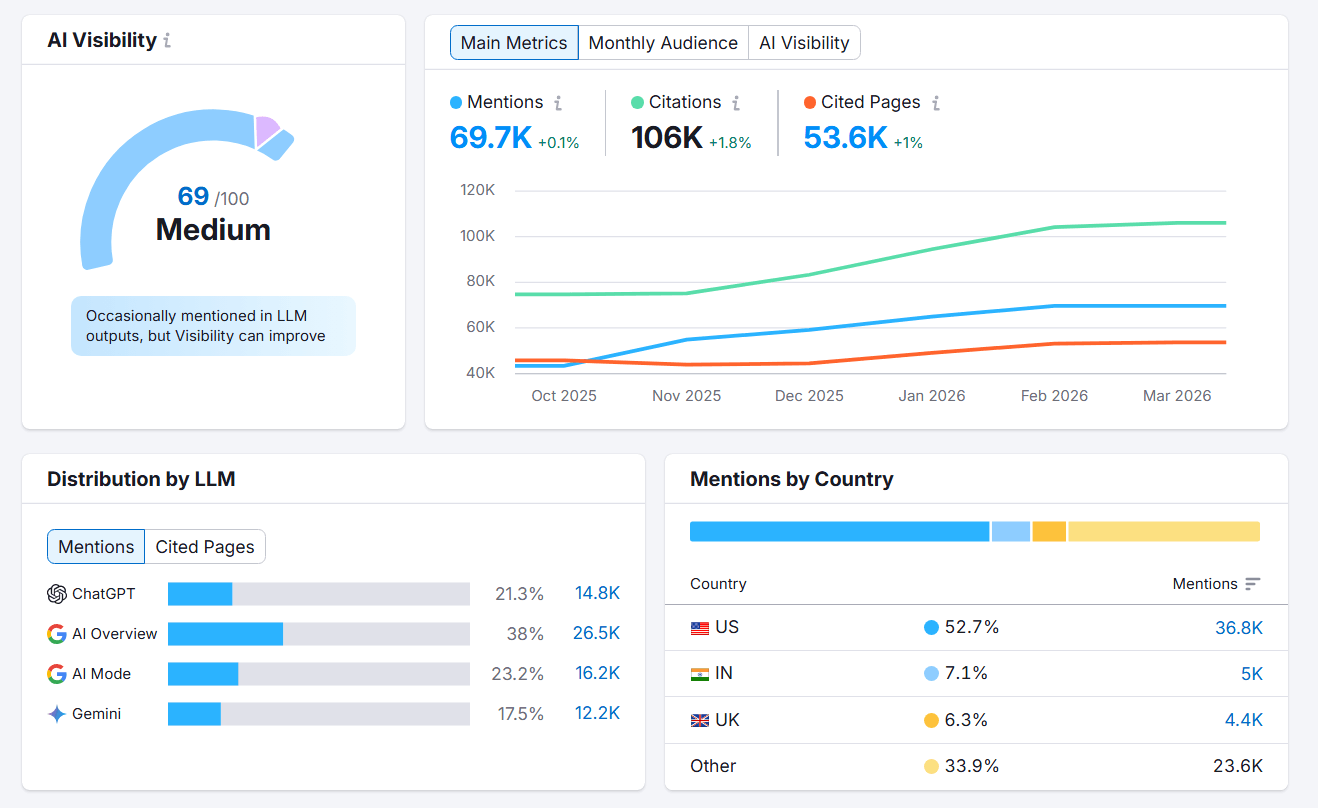
Semrush SEO + AI Search is the strongest all-in-one choice if you want traditional SEO research and AI search visibility in the same ecosystem. It works best for SaaS companies, agencies, and content teams that already need keyword research, competitor analysis, audits, rank tracking, backlink research, content planning, and AI visibility reporting.
The SEO + AI Search plans add AI visibility features such as brand performance tracking, prompts, AI reports, AI-ready site audit features, and AI visibility monitoring. That makes it useful when your team wants one source of truth instead of a separate SEO suite plus a separate AEO tracker.
Pricing: Semrush listed an SEO plan from $117.33/month billed annually and an SEO + AI Search Starter plan from $165.17/month billed annually when checked on July 26, 2026.
| Best features | Keyword research, competitor research, site audits, position tracking, AI visibility, AI reports, content and brand intelligence. |
| Pros | Broadest SEO workflow in this list, strong data depth, useful for agencies and SaaS teams, fewer tool handoffs. |
| Cons | More expensive than lightweight tools, and small blogs may not need the full ecosystem. |
| Best fit | SaaS, agencies, B2B content teams, and growth teams that need SEO plus AI visibility under one roof. |
| ReviewAIToolz verdict | Best all-in-one pick if budget allows and you want to connect SEO performance with AI search visibility. |
2. SE Ranking AI Search Toolkit
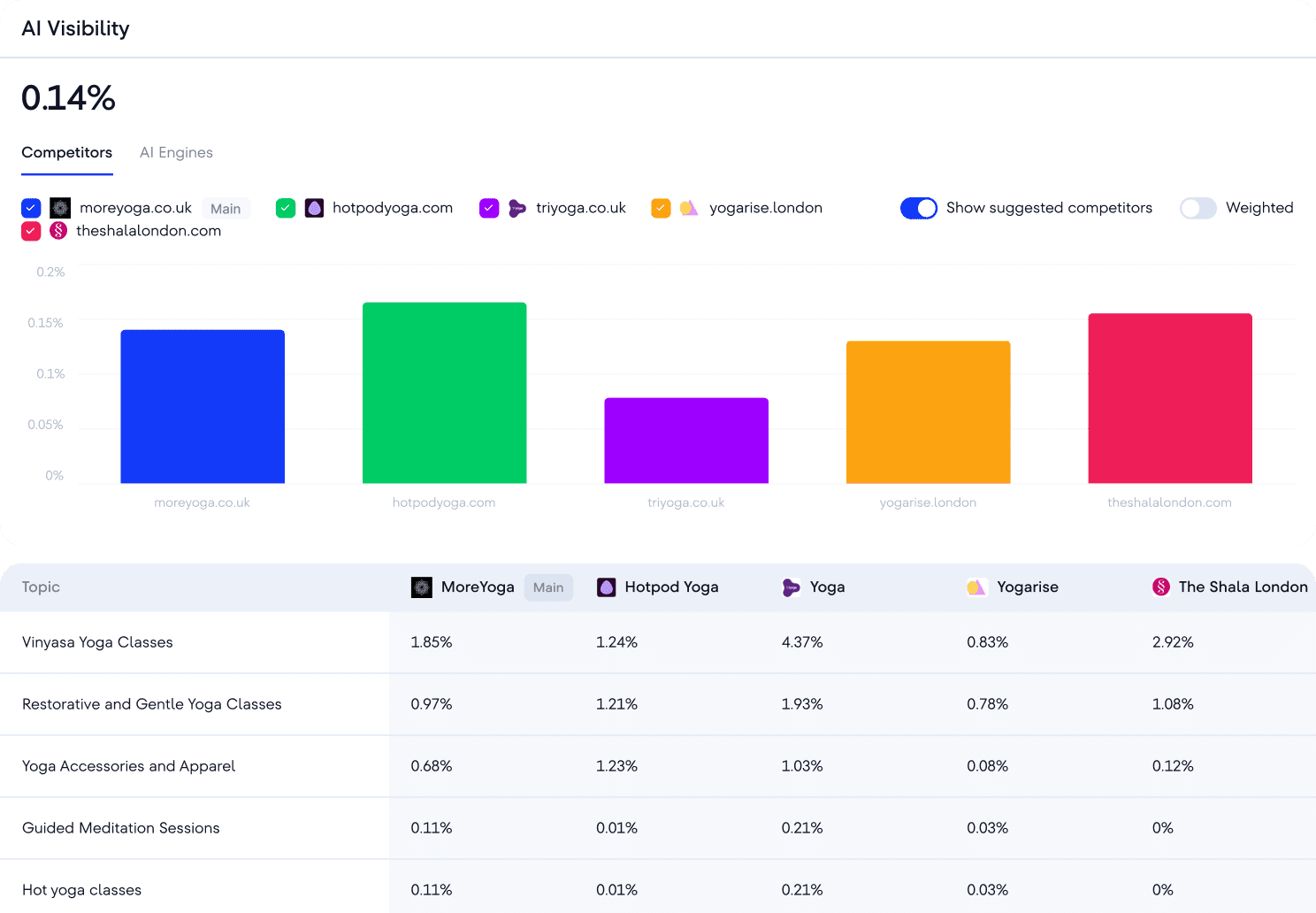
SE Ranking is a smart choice for teams that want a full SEO platform without paying enterprise-level prices. It covers keyword research, rank tracking, competitor research, site audits, backlinks, local SEO, reporting, and AI search visibility add-ons.
For AEO, the AI Search Toolkit is especially relevant because it tracks prompts, AI Overviews, AI Mode, ChatGPT, Gemini, Perplexity, linked mentions, competitors, and brand visibility. This makes it useful for agencies reporting to clients who now ask, “Are we showing up in AI answers?”
Pricing: SE Ranking listed an AI Search add-on from $71.20/month with annual billing, or $89/month monthly, plus the core SEO plan.
| Best features | Rank tracking, audits, keyword tools, competitor research, white-label reporting, AI Results Tracker, AI visibility checks. |
| Pros | Strong value, good reporting, practical for agencies, broad SEO coverage, useful AI search tracking. |
| Cons | AI Search is an add-on, so calculate final monthly cost based on projects and prompts. |
| Best fit | Agencies, SMBs, and SaaS teams that need SEO reporting plus AI visibility without Semrush-level cost. |
| ReviewAIToolz verdict | Best value pick for teams that need dependable SEO tools and client-friendly AI search reporting. |
3. Surfer
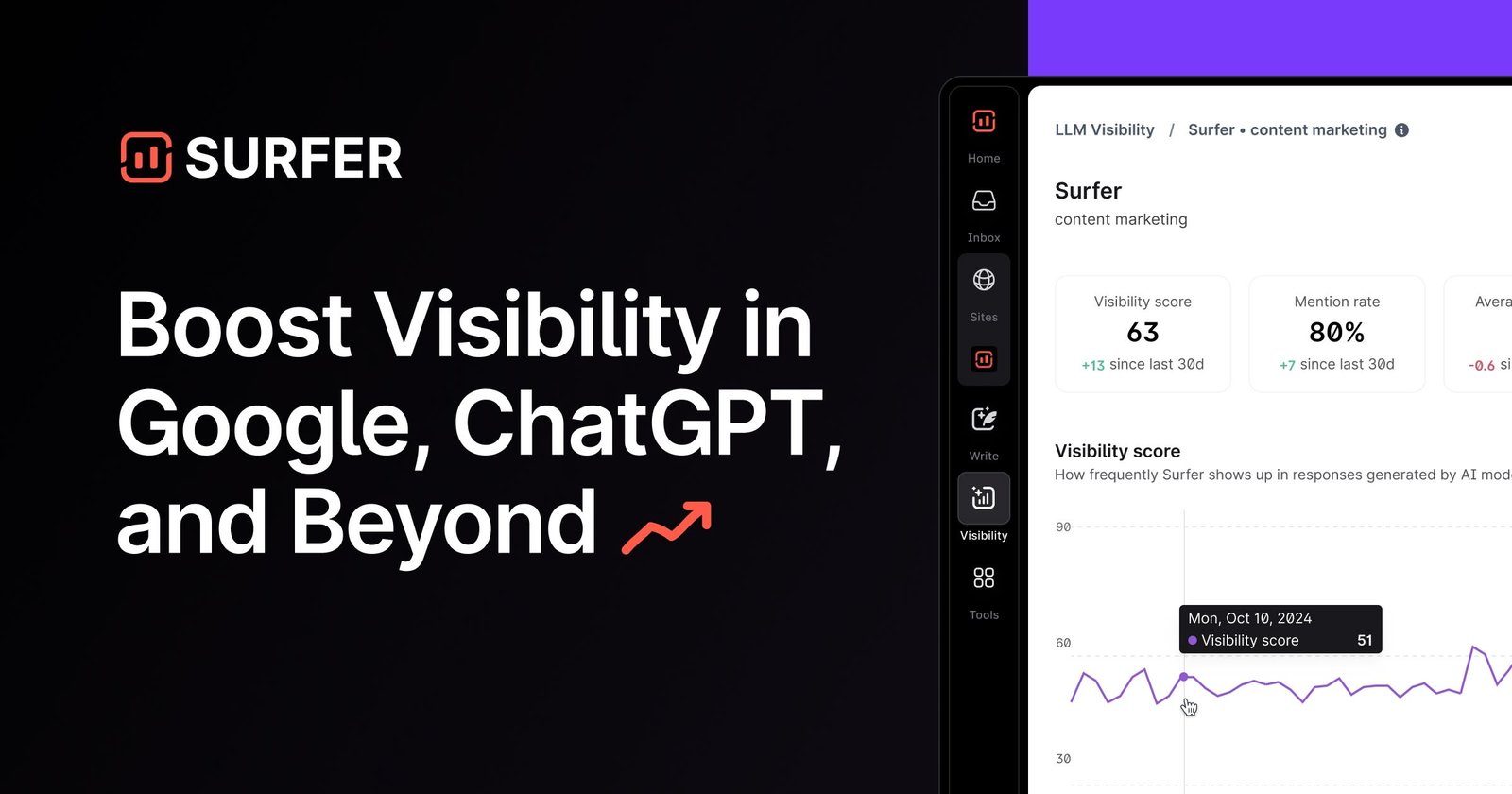
Surfer is best known for content optimization. It helps writers and SEO teams compare a page against ranking competitors, improve topical coverage, and publish content that is more aligned with search intent.
Surfer is valuable for AEO because answer engines reward clear, complete, structured, entity-rich content. Its newer AI visibility features make it more useful for teams that want to connect content optimization with AI search presence. If your main bottleneck is writing and improving pages, Surfer belongs high on your shortlist.
Pricing: Surfer listed Discovery from $49/month billed annually. Its standalone AI Tracker was listed from $158/month billed annually, while some content plans include AI visibility prompt tracking at different limits.
| Best features | Content Editor, content score, SERP analysis, optimization suggestions, AI visibility tracking options. |
| Pros | Excellent page-level optimization, easy for writers, strong for content teams, fast recommendations. |
| Cons | Not a complete technical SEO suite or backlink platform. |
| Best fit | Content teams, affiliate sites, SaaS blogs, and agencies that publish optimized articles frequently. |
| ReviewAIToolz verdict | Best for teams that need to turn weak drafts into stronger, clearer, search-ready pages. |
4. Frase
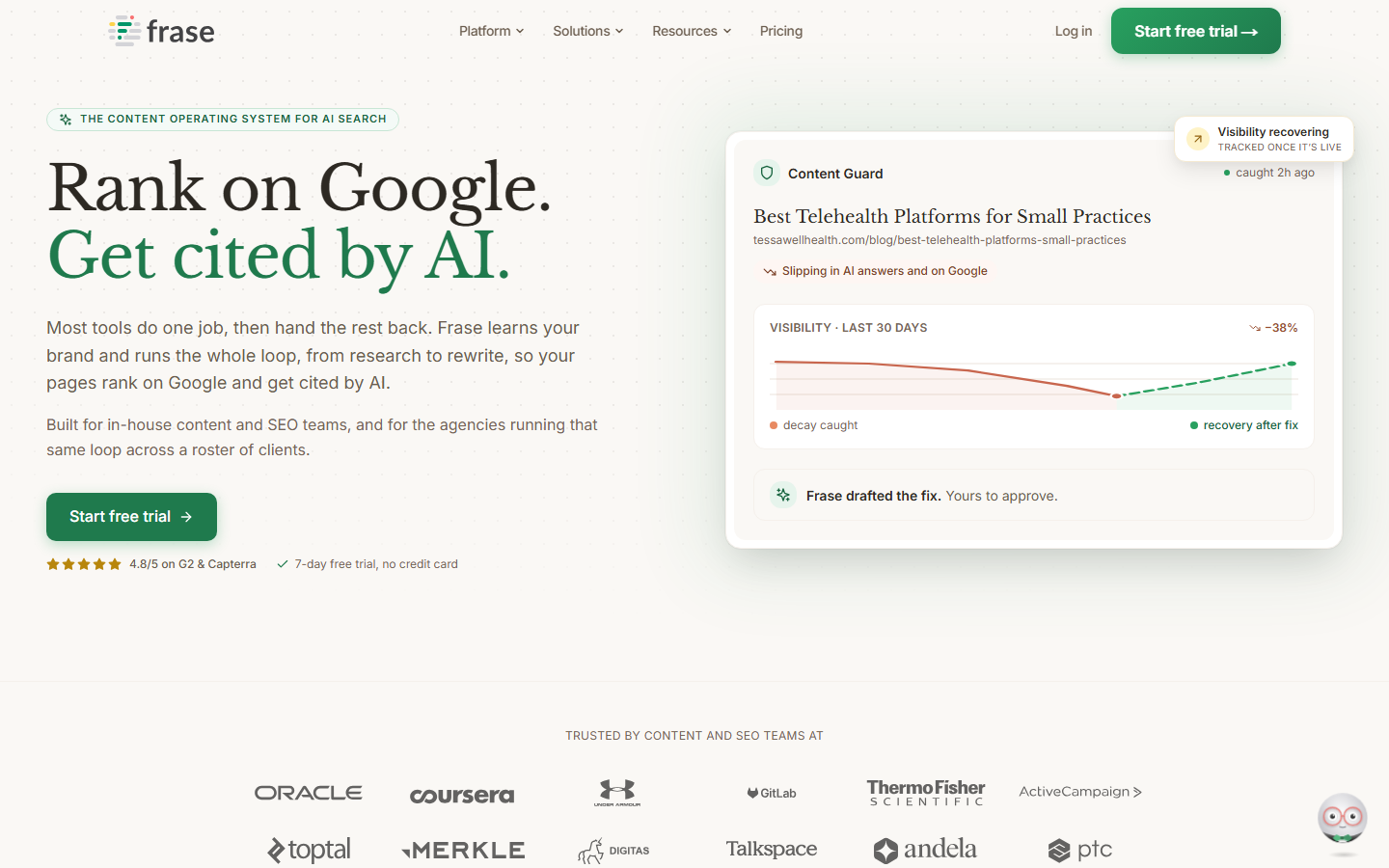
Frase is a strong choice for question-led content, briefs, and GEO-style optimization. It is especially useful when you need to understand what searchers are asking, what competing pages cover, and what your article needs to answer before publishing.
Frase’s workflow covers research, writing, publishing, monitoring, and fixing. Its pricing page mentioned SEO and GEO scores plus AI visibility on ChatGPT and Google AI. That gives it a natural role between traditional content briefs and modern AEO visibility.
Pricing: Frase listed Starter at $39/month billed yearly or $49/month month-to-month, with a 7-day trial and no credit card requirement.
| Best features | Question research, content briefs, outlines, SEO score, GEO score, WordPress publishing, AI visibility. |
| Pros | Good for search intent, FAQs, content briefs, and article planning; affordable compared with heavier platforms. |
| Cons | Less powerful for broad technical SEO, backlink analysis, and enterprise reporting. |
| Best fit | Blog teams, small SaaS sites, agencies, and writers building answer-ready content. |
| ReviewAIToolz verdict | Best practical bridge between SEO content planning and AEO-style answer coverage. |
5. Clearscope
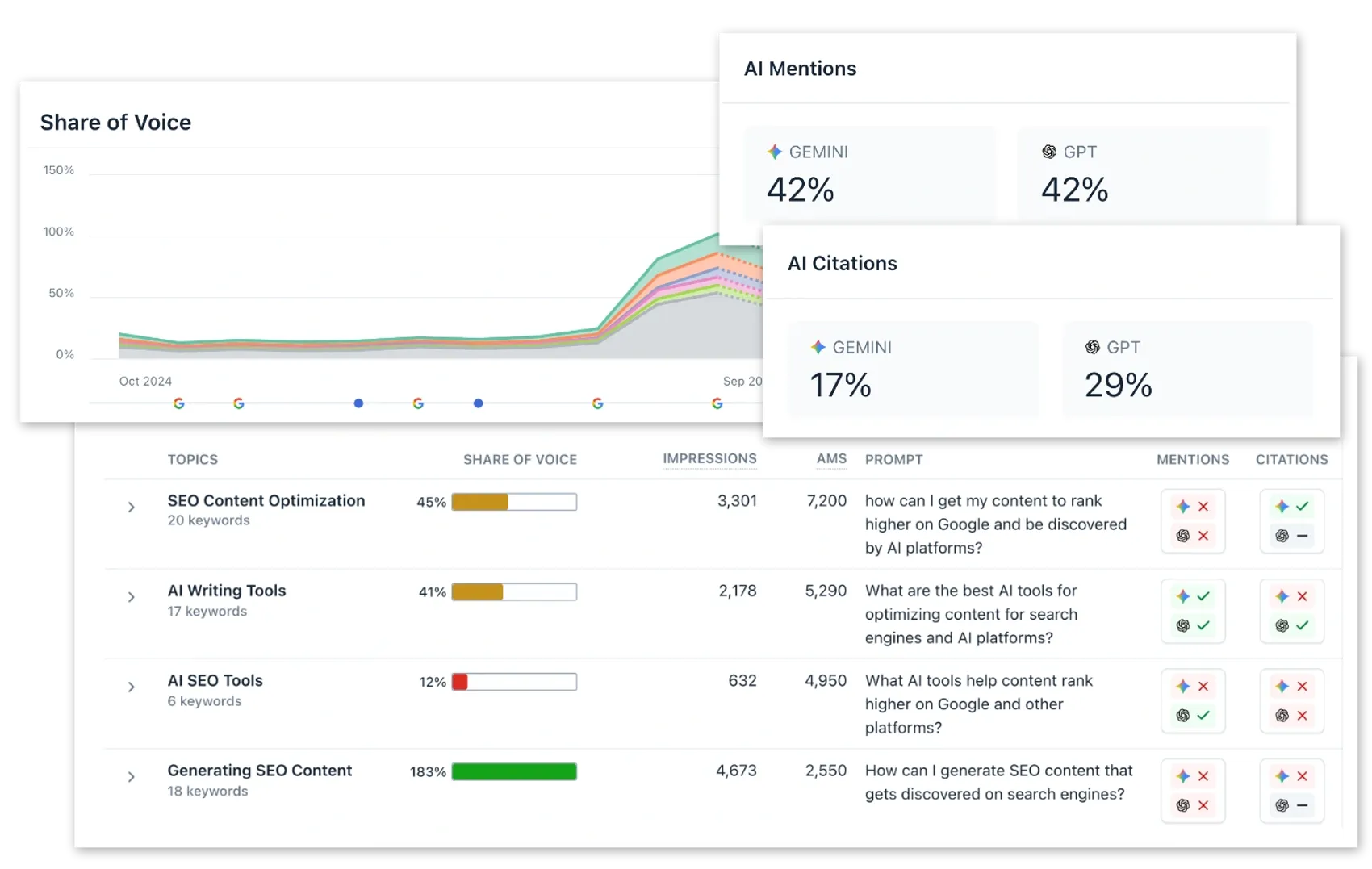
Clearscope is built for editorial teams that want clean content briefs and reliable optimization guidance. It is often preferred by teams that care about workflow quality, writer adoption, and simple recommendations over a crowded dashboard.
For SEO and AEO, Clearscope helps teams produce better pages by identifying relevant terms, topics, and gaps. Its current positioning includes SEO and AI search visibility, making it a good fit for teams that want to understand how content performs in both search and AI surfaces.
Pricing: Clearscope listed Essentials at $129/month and Business at $399/month when checked.
| Best features | Content briefs, term recommendations, content grading, AI search visibility, prompt tracking, citation signals. |
| Pros | Clean workflow, trusted by editorial teams, easy for writers, strong content optimization quality. |
| Cons | Price may be high for small personal blogs or early-stage sites. |
| Best fit | Editorial SEO teams, SaaS content teams, agencies, and publishers with a serious content calendar. |
| ReviewAIToolz verdict | Best if your team values high-quality briefs, writer-friendly optimization, and clear editorial workflow. |
6. Rank Math Content AI
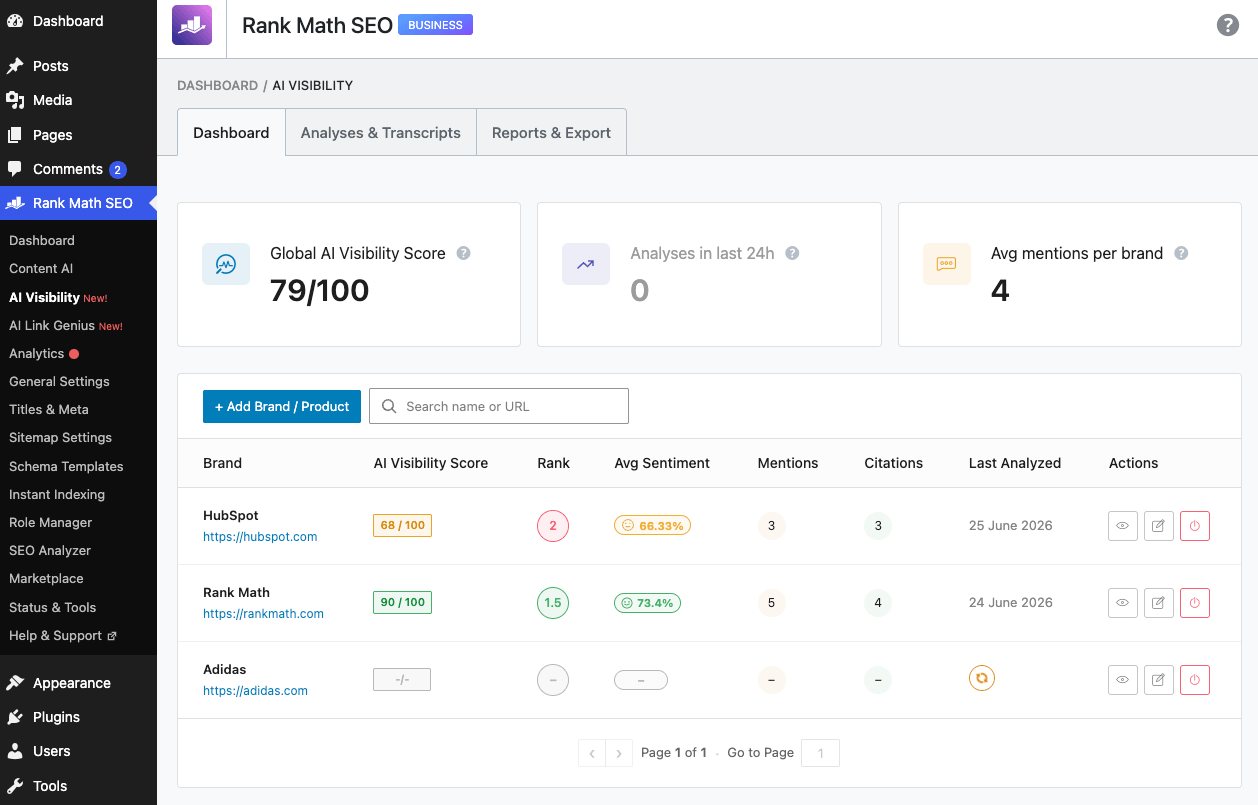
Rank Math Content AI is the easiest recommendation for WordPress site owners who want AI help inside the editor. Instead of moving between multiple platforms, you can use AI content suggestions, SEO guidance, AI alt text, internal link help, and AI visibility tools directly in your WordPress workflow.
Rank Math is especially relevant for small businesses because many new AI directory, SaaS, agency, and affiliate sites run on WordPress. Its AI Visibility product adds brand tracking, sentiment, competitor benchmarking, AI response transcripts, and exports. At launch, Rank Math said AI Visibility supported ChatGPT first, with more AI platforms planned.
Pricing: Rank Math Content AI listed Starter at EUR5.99/month billed annually, Creator at EUR10.99/month billed annually, and Expert at EUR16.99/month billed annually.
| Best features | WordPress SEO workflow, Content AI, AI alt text, internal linking, brand AI visibility, response transcripts. |
| Pros | Very affordable, WordPress-native, helpful for beginners, good for on-page SEO and content workflows. |
| Cons | Not as deep as Semrush or SE Ranking for broad competitive research; AI Visibility platform coverage should be checked before buying. |
| Best fit | WordPress blogs, small businesses, directories, affiliate sites, and founders who want simple SEO plus AI help. |
| ReviewAIToolz verdict | Best WordPress-first option, especially for smaller sites that want useful AI SEO support without a large software bill. |
7. MarketMuse
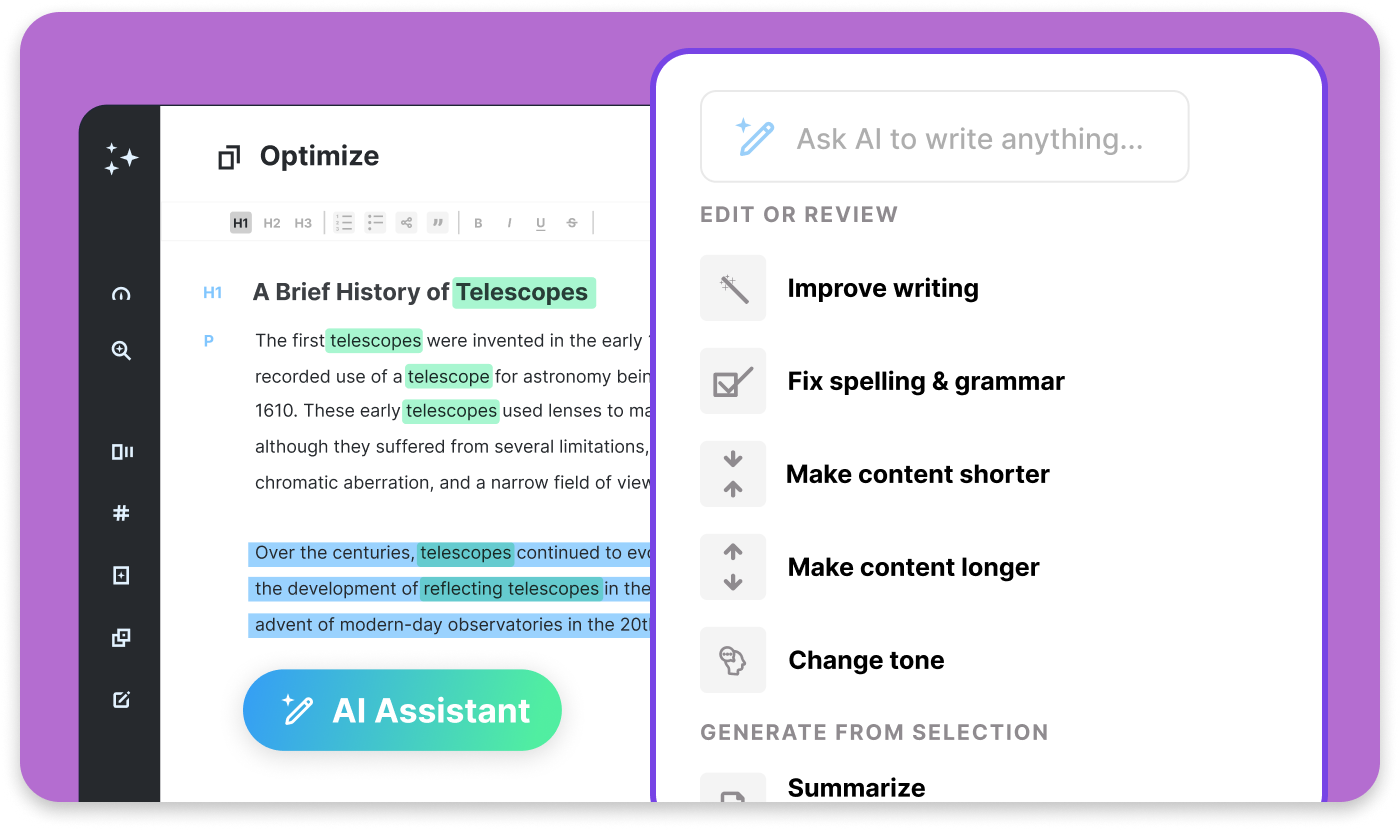
MarketMuse is not just a writing assistant. It is a content strategy platform built around topic authority, content inventory, planning, briefs, and optimization. That makes it useful for teams that want to build an expert content moat instead of publishing disconnected articles.
For AEO, MarketMuse matters because AI answer engines prefer clear entity coverage, authoritative pages, and complete answers. If your site has thin content, duplicate angles, and weak topic clusters, an AI visibility tracker may show the problem, but MarketMuse can help you plan the content system needed to fix it.
Pricing: MarketMuse listed a free plan and paid packages with different limits. Some paid details may require checking the current pricing page or booking a demo.
| Best features | Topic modeling, content inventory, content briefs, optimization, planning, topical authority workflows. |
| Pros | Strong for strategy, helpful for authority building, useful when managing many content assets. |
| Cons | Less focused on prompt-level AI visibility tracking than Profound, Peec, Otterly, or LLMrefs. |
| Best fit | Established blogs, SaaS content teams, publishers, and agencies building topical authority. |
| ReviewAIToolz verdict | Best for teams that need a stronger content strategy layer before chasing AI answer visibility. |
8. Alli AI
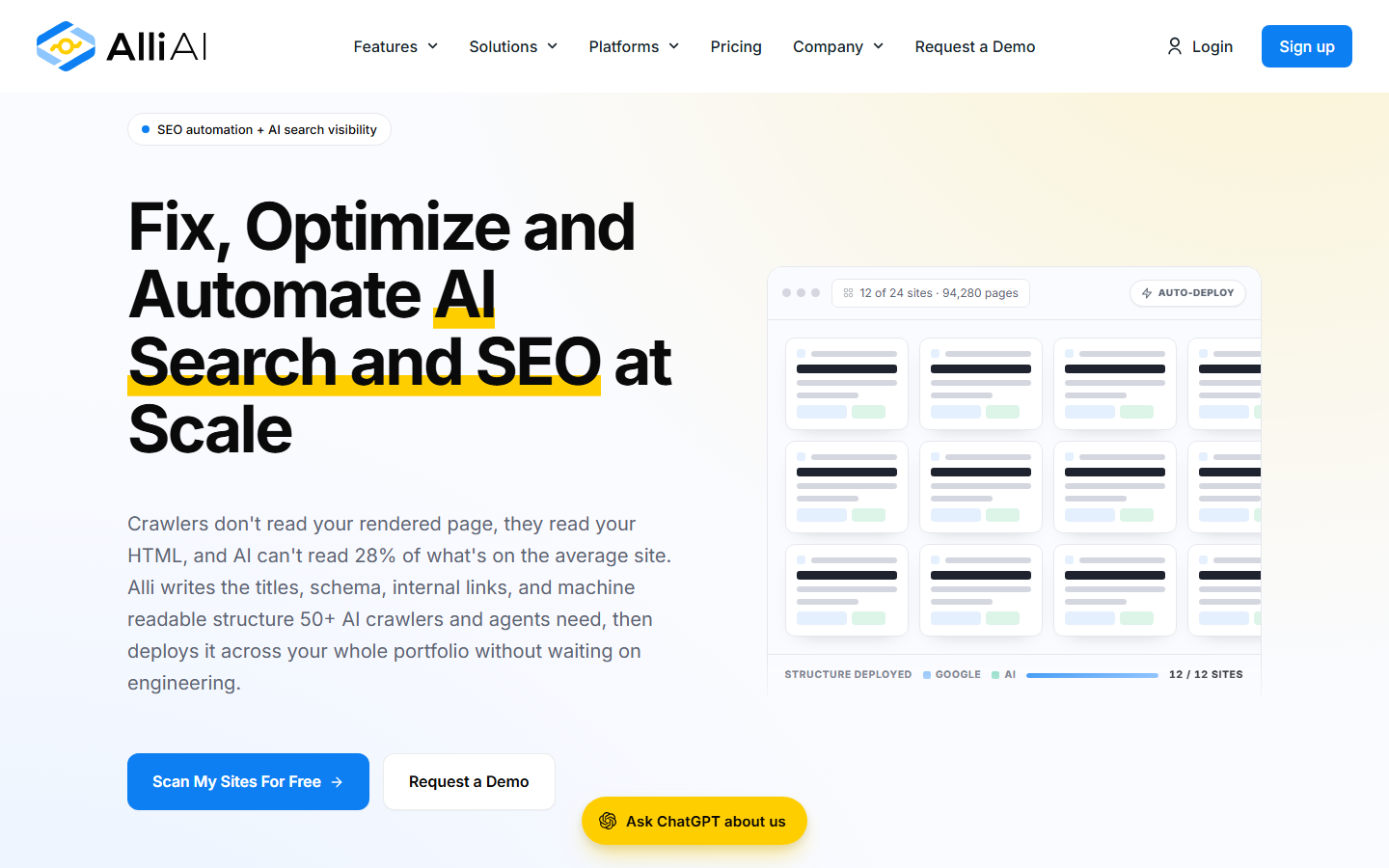
Alli AI is different from content-only optimization tools. It focuses on AI search visibility, AEO, GEO, SEO automation, technical fixes, and page-level deployment. If you manage many pages and want to implement changes faster, Alli AI is worth testing.
Its pricing page mentioned AI Search Visibility Engine, pre-rendering for AI crawlers, AI bot traffic monitoring, LLM Mode, keyword tracking, site speed optimization, link builder, and reports. That makes it useful for teams thinking about the technical side of search and AI discoverability.
Pricing: Alli AI listed Business at $249/month billed annually, or $299 month-to-month, with a 10-day free trial.
| Best features | SEO automation, AI Search Visibility Engine, technical fixes, AI crawler support, page optimization, reports. |
| Pros | Strong for deployment and technical automation, useful for larger sites, good AEO/GEO positioning. |
| Cons | Overkill if you only need one article optimized or a simple content brief. |
| Best fit | Agencies, SaaS sites, ecommerce sites, and multi-page websites that need faster technical SEO execution. |
| ReviewAIToolz verdict | Best for teams that want to automate SEO and AEO implementation across a website, not only write content. |
9. Profound
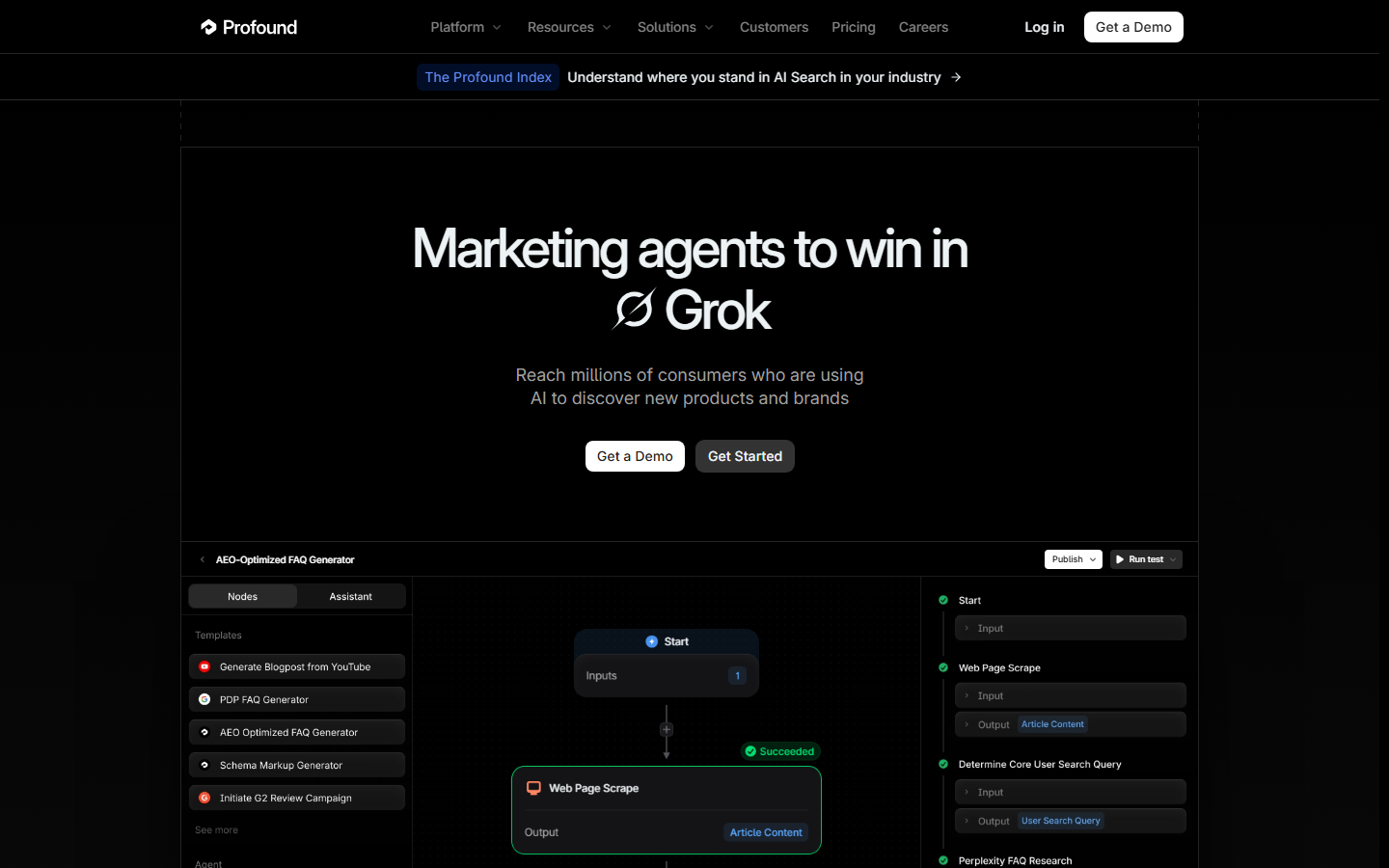
Profound is one of the clearest AEO-first platforms in this list. Instead of starting with classic SEO tasks, it starts with the question modern executives care about: when a user asks an AI engine for a recommendation, does your brand appear, how is it described, and which sources influence the answer?
Profound is useful for tracking ChatGPT, Perplexity, Google AI Overviews, citations, competitor presence, answer sentiment, and content opportunities. It is a strong add-on to Semrush, SE Ranking, Ahrefs, or Google Search Console when you want an AI answer analytics layer.
Pricing: Profound listed Starter at $99/month and Growth at $399/month. Plan limits included prompt and response volume differences, so check the current pricing page before choosing.
| Best features | Answer Engine Insights, brand visibility, AI citations, sentiment, competitor tracking, prompt monitoring. |
| Pros | Purpose-built for AEO, good for executives and brand teams, clear AI search visibility focus. |
| Cons | Not a complete replacement for a full SEO suite or content optimization platform. |
| Best fit | SaaS brands, agencies, PR teams, and companies that need to monitor AI answer engine visibility. |
| ReviewAIToolz verdict | Best dedicated AEO analytics pick when you already have SEO tools but need AI answer visibility. |
10. Peec AI
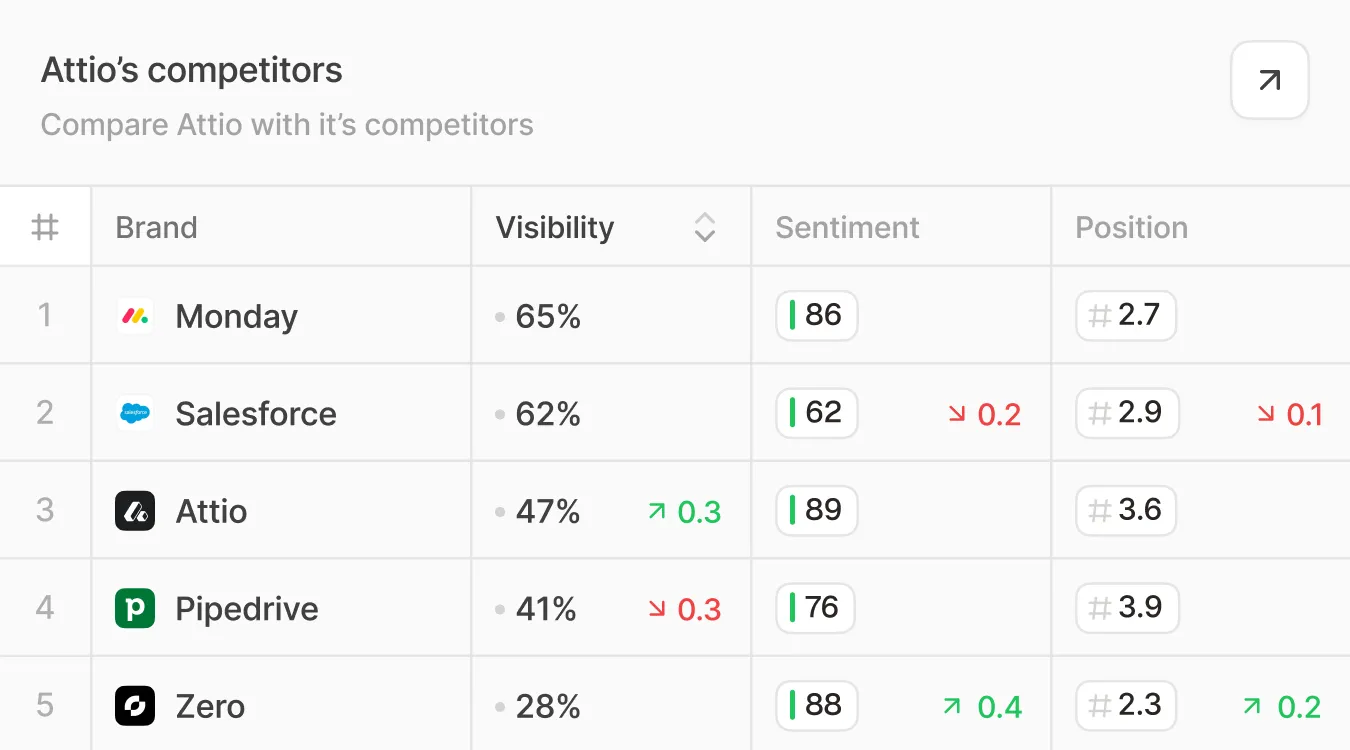
Peec AI is built for marketing teams that want to measure how their brand performs in AI search platforms. It tracks visibility, position, sentiment, prompts, models, sources, and recommendations. That makes it useful when leadership asks for AI search reporting beyond normal rank tracking.
Peec AI fits the AEO workflow because it helps answer questions like: which prompts mention our competitors, which sources influence AI answers, which topics are missing, and whether brand sentiment is positive, neutral, or negative.
Pricing: Peec AI’s public pricing page showed plan-based limits such as Starter with 50 prompts, 3 models, unlimited users, daily tracking, and 1 project. The accessible page did not expose one clean public dollar amount in our check, so confirm current pricing before budgeting.
| Best features | AI search visibility, position, sentiment, prompts, models, sources, recommendations, competitor comparison. |
| Pros | Strong AEO reporting workflow, useful dashboards, good for marketing teams and agencies. |
| Cons | Pricing clarity should be checked directly, and it is not a full traditional SEO platform. |
| Best fit | Marketing teams that need AI search visibility and competitor reporting across prompts and models. |
| ReviewAIToolz verdict | Best for teams that want AI search reporting with source, sentiment, and competitor context. |
11. Otterly.AI
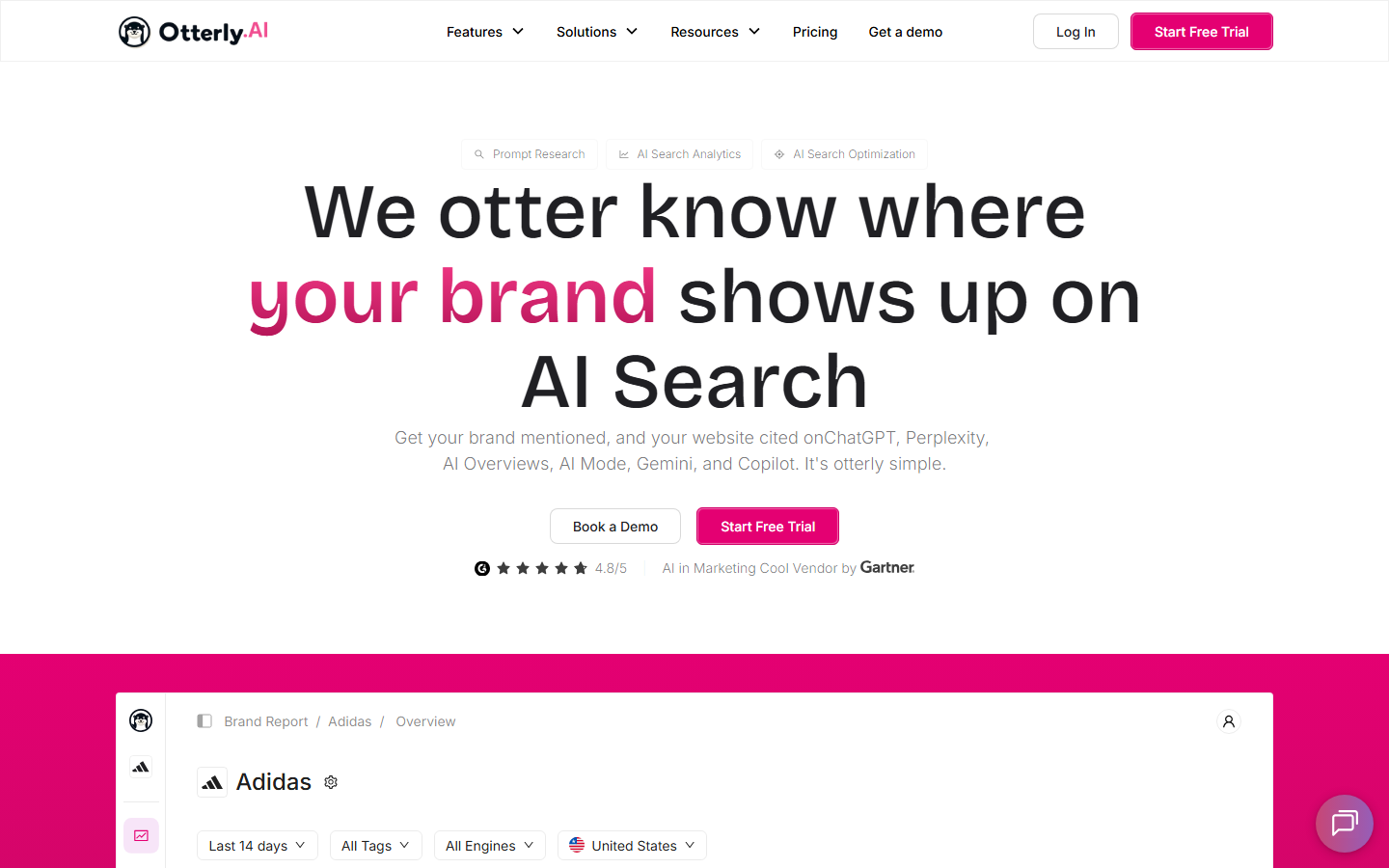
Otterly.AI is a practical entry point for AI search monitoring. It helps teams track brand visibility, domain rankings, citations, AI prompt research, GEO audits, and multi-country AI search performance.
Otterly is appealing for small teams because its entry pricing is lower than many enterprise AEO analytics tools. It is useful if you want to start tracking ChatGPT, Google AI Overviews, Perplexity, Microsoft Copilot, and other AI search engines without building a custom reporting system.
Pricing: Otterly listed Lite at $29/month monthly or $25/month on annual billing. Entry plans had prompt limits, and some engines or regions may require higher plans or add-ons.
| Best features | AI search monitoring, brand visibility index, domain ranking, link citation analysis, GEO audits, prompt research. |
| Pros | Affordable entry point, supports multiple AI search engines, useful for small teams starting AEO tracking. |
| Cons | Prompt limits can become restrictive as your tracking needs grow. |
| Best fit | Small SaaS teams, agencies, founders, and marketers who want affordable AI visibility monitoring. |
| ReviewAIToolz verdict | Best starter AEO tracker when you want AI visibility data without enterprise pricing. |
12. LLMrefs
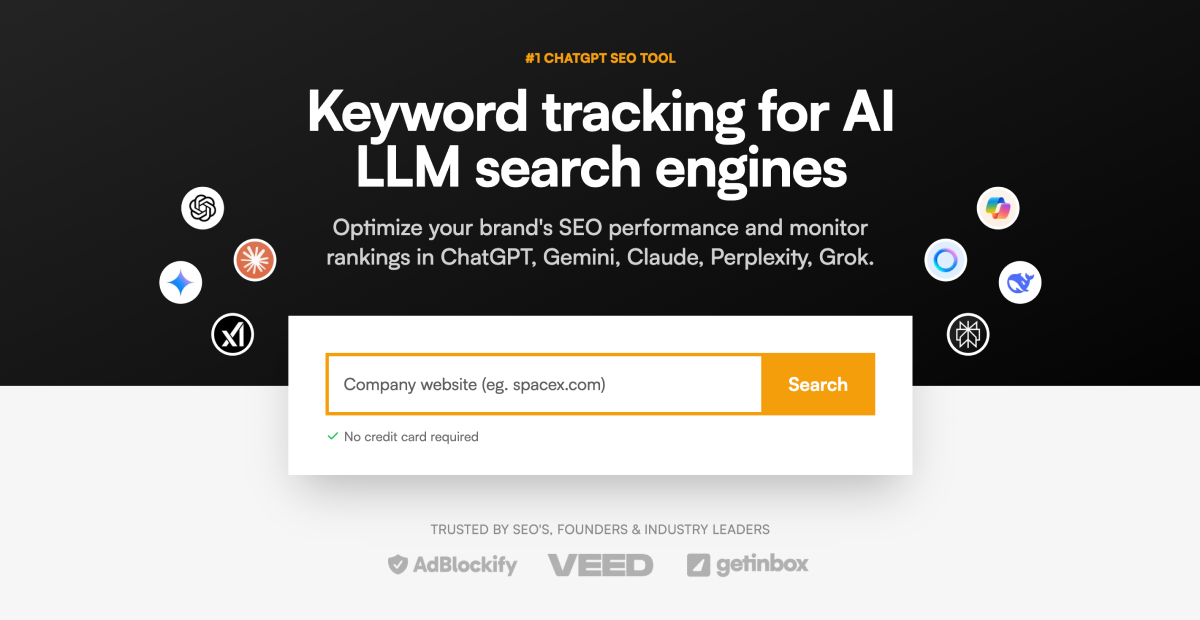
LLMrefs is designed for tracking how brands and websites appear inside generative AI search. It covers AI search rankings, citations, competitor benchmarking, geo-targeting, and keyword-style tracking for AI search experiences.
LLMrefs is especially useful if you want a simple way to start measuring AI search visibility without committing to a large enterprise platform. Its public page stated that users can create a free account with no credit card, set up a project with a brand and domain, add SEO keywords, and get a dashboard in about 5 minutes.
Pricing: LLMrefs stated that a free account is available with no credit card. Confirm current paid plan limits, exports, prompts, and country support before scaling.
| Best features | LLM SEO tracking, AI citations, keyword-style tracking, competitor benchmarks, geo-targeting, generative search analytics. |
| Pros | Fast starting point, focused on AI search visibility, useful for experiments and early AEO reporting. |
| Cons | Not a full SEO suite, so pair it with Google Search Console, Semrush, SE Ranking, Surfer, Frase, or Rank Math. |
| Best fit | Founders, small marketing teams, and agencies starting LLM SEO and AI search tracking. |
| ReviewAIToolz verdict | Best lightweight LLM SEO tracker for teams that want to start measuring AI mentions and citations quickly. |
Recommended SEO And AEO Stacks
Most teams do not need all 12 tools. A smarter approach is to build a stack around your current bottleneck.
| Business type | Suggested stack | Why it works |
|---|---|---|
| Small WordPress site | Rank Math Content AI + Frase or Surfer + LLMrefs or Otterly | Affordable content creation, WordPress SEO, and basic AI visibility tracking. |
| Bootstrapped SaaS blog | SE Ranking + Frase + Otterly | Good balance of keyword data, content briefs, rank tracking, and AI answer monitoring. |
| Content-heavy agency | SE Ranking + Surfer or Clearscope + Peec AI | Strong client reporting, optimized content production, and AEO visibility dashboards. |
| Enterprise SaaS | Semrush SEO + AI Search + Profound + MarketMuse | Broad SEO intelligence, answer engine tracking, and topic authority planning. |
| Large multi-page website | Semrush or SE Ranking + Alli AI + Clearscope | Combines research, technical deployment, and content optimization. |
| AI visibility-first team | Profound + Peec AI or Otterly + Google Search Console | Tracks answer engine visibility while keeping real Google performance in view. |
How To Choose The Right Tool In Under 5 Minutes
Use this decision matrix before booking demos or starting trials.
| If you need one platform for SEO plus AI visibility | Start with Semrush. Compare SE Ranking if budget matters. |
| If you publish lots of articles | Start with Surfer, Frase, or Clearscope. |
| If your website runs on WordPress | Start with Rank Math Content AI, then add an AEO tracker if needed. |
| If you need answer engine analytics | Start with Profound, Peec AI, Otterly, or LLMrefs. |
| If technical SEO implementation is slow | Test Alli AI for automation and site-wide deployment. |
| If your content strategy is messy | Use MarketMuse to rebuild topic clusters and content authority. |
What Most AI SEO Tool Lists Miss
Many AI SEO roundups are long lists with little decision support. The bigger gap is that SEO, AEO, and GEO are different jobs.
- A writing tool is not an AEO strategy. Publishing AI-written content without original insight, testing, expertise, or useful structure can hurt trust.
- An AI visibility tracker does not fix bad content. It can show that you are missing from ChatGPT or AI Overviews, but you still need better pages, entities, sources, and authority.
- Google still needs accessible, helpful pages. Do not chase myths. Google says its AI search features still rely on strong SEO fundamentals and helpful content.
- Prompt tracking needs a buyer journey. Track prompts that reflect real searchers, such as “best AI SEO tool for SaaS” or “Semrush alternative for AI visibility,” not random vanity prompts.
- AI Overviews and ChatGPT are not the same surface. A tool may track one, the other, or both. Always verify supported engines before buying.
- Pricing can change fast. AI search tools often price by prompts, responses, projects, models, countries, or brands. Check limits before signing up.
A Practical 30-Day SEO And AEO Testing Plan
If you want results from these tools, do not simply buy software and hope. Run a small test.
- Days 1-3: Choose one core topic cluster and export current Google Search Console queries, ranking URLs, and high-intent competitor pages.
- Days 4-7: Use Semrush, SE Ranking, Surfer, Frase, Clearscope, or MarketMuse to identify missing topics, weak entities, search intent gaps, and internal link opportunities.
- Days 8-14: Rewrite or publish 3 to 5 pages with stronger answers, clearer headings, better tables, original examples, FAQs, useful images, and expert review.
- Days 15-21: Track Google rankings, impressions, clicks, AI Overview visibility, ChatGPT mentions, citations, sentiment, and competitor prompts.
- Days 22-30: Improve pages based on evidence. Add missing sections, fix thin answers, update internal links, improve schema, compress images, and request indexing in Google Search Console.
The goal is not to impress a tool score. The goal is to create pages users can trust and answer engines can confidently understand.
Final Recommendation
For most teams, the strongest starting point is a simple three-part stack: one SEO platform, one content optimization tool, and one AI visibility tracker.
A practical setup could be SE Ranking + Frase + Otterly for budget-conscious teams, Semrush + Surfer + Profound for larger SaaS teams, or Rank Math Content AI + Frase + LLMrefs for WordPress-based sites. If your site has hundreds or thousands of pages, add Alli AI for faster technical implementation. If your content strategy lacks topical authority, add MarketMuse.
If your company builds an AI SEO, AEO, GEO, or AI visibility tool, you can submit your AI tool to ReviewAIToolz. For sponsored listings, guest posts, or brand visibility packages, visit Advertise, Write for Us, or contact team.reviewaitoolz@gmail.com.
FAQs About AI Tools For SEO And AEO
What are AI tools for SEO and AEO?
AI tools for SEO and AEO help websites improve visibility in search engines and answer engines. They can support keyword research, content briefs, optimization, technical SEO, AI Overview tracking, ChatGPT visibility, citations, sentiment, and brand mentions.
Is AEO different from SEO?
Yes, but they overlap. SEO focuses on search engine visibility and organic clicks. AEO focuses on being selected, cited, or summarized by answer engines and generative search experiences. Helpful content, clean structure, authority, and crawlability support both.
Which AI tool is best for SEO and AEO in 2026?
Semrush is the best all-in-one choice for SEO plus AI visibility. SE Ranking is a strong value option. Surfer, Frase, and Clearscope are best for content optimization. Rank Math is best for WordPress. Profound, Peec AI, Otterly, and LLMrefs are best for dedicated AI answer visibility tracking.
Which tools track ChatGPT and AI Overviews?
SE Ranking, Semrush, Profound, Peec AI, Otterly.AI, and LLMrefs are relevant choices for tracking AI search visibility. Coverage varies by plan, so confirm support for ChatGPT, Google AI Overviews, Google AI Mode, Perplexity, Gemini, Claude, or Copilot before buying.
Do I need a separate AEO tool if I already use Semrush or SE Ranking?
Not always. If your Semrush or SE Ranking plan already includes enough AI visibility tracking for your prompts and brands, you may not need another AEO tool. Dedicated trackers such as Profound, Peec AI, Otterly, or LLMrefs become useful when you need deeper AI answer analytics, citations, sentiment, or competitor reporting.
Do I need llms.txt to rank in Google AI Overviews?
No. Google has said it does not use llms.txt for Google Search or AI features. Focus on helpful content, crawlable pages, clear structure, good UX, useful images, internal links, schema where appropriate, and real expertise.
What is the best AI SEO tool for WordPress?
Rank Math Content AI is the most practical starting point for many WordPress sites because it works inside the WordPress SEO workflow. WordPress teams can also use Frase, Surfer, Clearscope, Semrush, SE Ranking, or MarketMuse depending on budget and content volume.
Are free AI SEO and AEO tools enough?
Free tools can help you start, especially Google Search Console, free trials, limited AI visibility checks, and free accounts. They are usually not enough for serious scaling because prompt limits, project limits, exports, reporting, and historical tracking become important.
How often should I update content for AI Overviews and ChatGPT visibility?
Review important pages at least monthly in competitive niches, and sooner when rankings, AI mentions, pricing, product features, or competitor pages change. Update facts, examples, screenshots, internal links, FAQs, and expert notes when the page no longer reflects current reality.
Can AI tools guarantee rankings in Google or ChatGPT?
No tool can guarantee rankings, AI Overview placement, or ChatGPT mentions. A good tool can reveal opportunities and speed up execution, but results still depend on content quality, authority, user satisfaction, technical SEO, competition, and how search systems evaluate your site.
Business inquiries: For tool submissions, sponsored listings, guest posts, corrections, or advertising, contact team.reviewaitoolz@gmail.com.
{
Found something wrong or outdated? Report an issue. Want us to cover something? Suggest a topic.
Comments